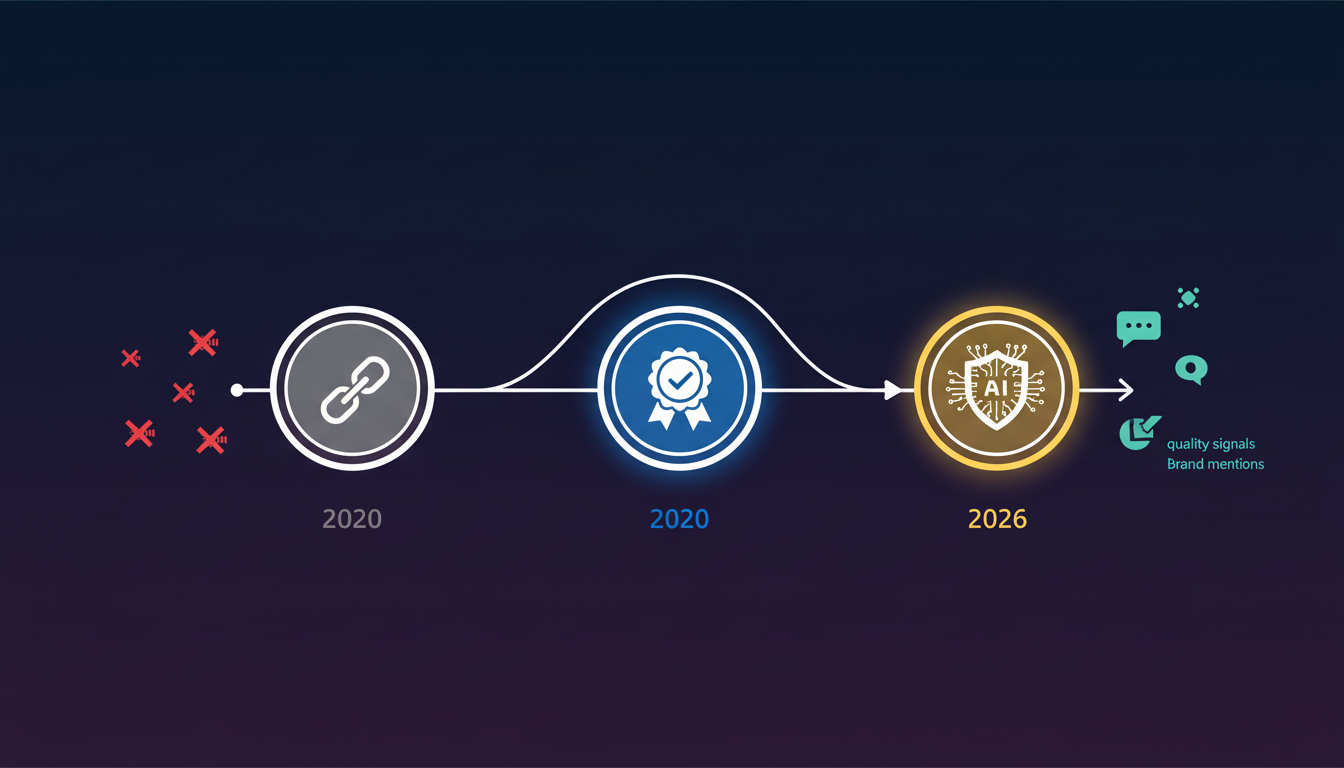
Link building in 2026 It has evolved from simply acquiring backlinks to building trust signals. The most effective strategies are: Digital PR (used by 67.3% of marketers), expert contributions on platforms like Featured/HARO, and creating original research with proprietary data (+156% link acquisition).
New for 2026: Brand mentions (mentions without links) are now a ranking factor. 76% of the pages cited in AI Overviews also have a strong backlink profile.
If you have a website and want to get organic traffic, you need quality backlinks. But in 2026, link building isn't what it was five years ago.
Google has become much more sophisticated in evaluating links. It's no longer just the quantity that counts, but the quality, thematic relevance, and even the brand mentions without links. Furthermore, with the advent of Google AI Overviews, sites with strong backlink profiles are cited more often in AI responses.
In this guide, I'll show you exactly how to build links in 2026: strategies that work, mistakes to avoid, and tools to use.
What is Link Building in 2026?
Link building is the practice of obtaining links (backlinks) from other websites to yours, with the goal of improving your search engine rankings.
But in 2026 the definition was broadened:
Modern link building includes not only the acquisition of traditional backlinks, but also:
- Brand mentions (mentions of your brand without links)
- Citations from authoritative sources (journalists, experts)
- Presence in listicle (“The Best Xs of 2026”)
- AI Citation Optimization (Google AI Overviews, ChatGPT, Perplexity)
The ultimate goal is to build signs of trust that demonstrate to Google (and AI) that your site is authoritative and worthy of citation.
📊 LINK BUILDING STATISTICS 2025-2026
• 94% online content does not receive any external links
• 52.3% of marketers consider link building the most difficult part of SEO
• 67.3% use Digital PR as your main strategy
• 3.8x more backlinks for pages in position #1 vs positions 2-10
• 76% of the pages cited in AI Overviews are also in Google Top 10
• $508.95 average cost of a quality backlink
Why Are Links Still Important in 2026?
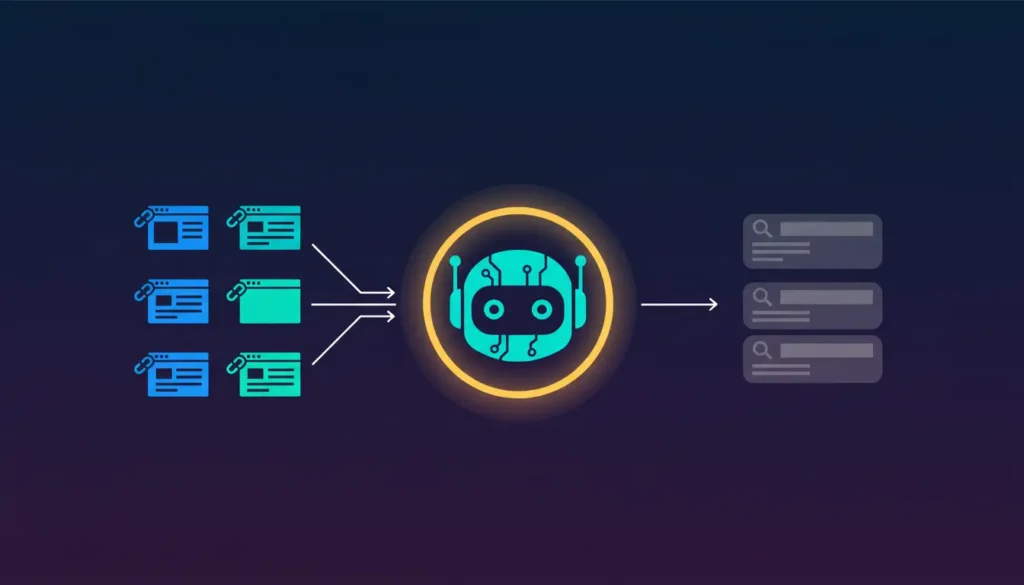
The short answer: Backlinks remain among Google's top 3 ranking factors.
Let's go back to understand why. Before Google, search engines like Yahoo ranked pages based solely on content. PageRank Algorithm Google changed everything: instead of just analyzing the content, Google started considering how many people linked to that page.
Nearly 25 years later, links are still crucial. But there's one important difference:
What changed in 2026
- Quality > Quantity: A link from Il Sole 24 Ore is worth more than 100 links from unknown sites.
- Thematic relevance: A link from a site in your industry is worth much more
- Brand mentions: Google now also considers mentions without links as trust signals
- AI Overviews: 76% of the pages cited in Google AI answers have a strong backlink profile
The new paradigm: Trust Signals
In 2026, we are no longer just talking about “link building” but about building signs of trust. This includes:
- Traditional backlinks (dofollow)
- Brand mentions in authoritative articles
- Reviews on third-party platforms
- Quotes in listicle (“The best X”)
- Presence in AI Overviews
How to Identify a Quality Link in 2026
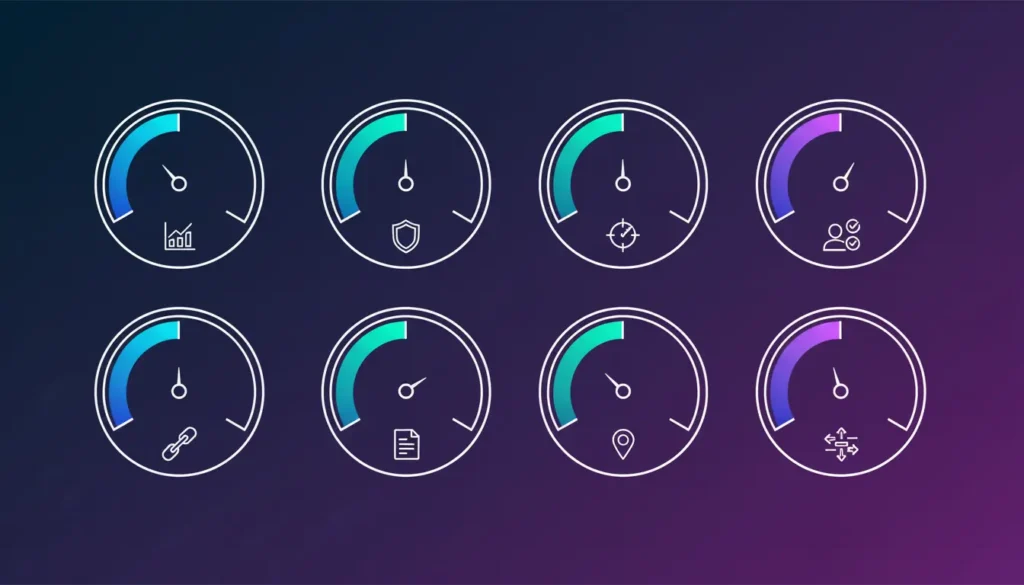
Before you look for backlinks, you need to know what makes a truly effective link.
Traditional Metrics (Still Valid)
1. Domain Authority (DA) / Domain Rating (DR)
The quality of a link depends on the authority of the domain hosting it. I use Ahrefs for DR and Moz for DA. A link from a site with a DR of 70+ will have much more impact than one with a DR of 20.
2. Page Authority
It's not just the domain authority that matters, but also the authority of the specific page. A page with many own backlinks will send more link juice to your site.
3. Trust Flow / Citation Flow
Metrics created by Majestic that measure:
- Trust Flow: How reliable a site is based on the quality of its backlinks
- Citation Flow: how influential it is based on the amount of links received
A good TF/CF ratio indicates a quality site.
4. Thematic Relevance
A link from a site in your industry is worth much more. If you sell gardening products, a link from a gardening blog is more relevant than one from a technology site (even if the latter has a higher DA).
New Metrics 2026
5. EEAT Score
Google evaluates Experience, Expertise, Authoritativeness, and Trustworthiness. Links from sites with high EEAT are more valuable.
6. Anchor Text Diversity (CRITICAL!)
This is the most important news of 2024-2026:
⚠️ WARNING: Anchor Text Diversity
Studies from 2025 have shown that sites with anchor text diversity under 30% (i.e. they use the same anchor text more than 70% of the times) have undergone a average drop of 15 positions in competitive niches. Always diversify your anchor text!
7. Link Position
A link in the body of the content (first paragraphs) is worth more than a link in the sidebar or footer.
8. Real Page Traffic
A link from a page that receives real traffic is more valuable than one from a “dead” page.
✅ CHECKLIST: Is the Link Quality?
☐ Domain DR/DA greater than 30?
☐ Is the site thematically relevant?
☐ Is the link in the body of the content (not sidebar/footer)?
☐ Does the page get real organic traffic?
☐ Is the link dofollow?
☐ Is the anchor text natural and varied?
☐ Is the site not a link farm or PBN?
The 7 Link Building Strategies That Work in 2026
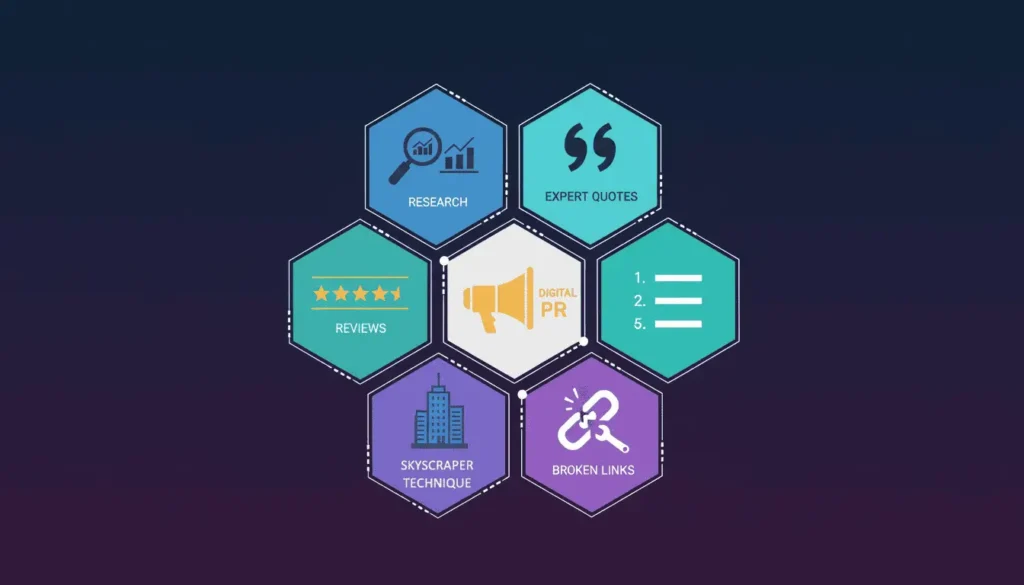
Here are the strategies I personally use that bring concrete results.
1. Digital PR (The 1TP5Q1 Strategy of 2026)
Digital PR has become the most effective link building strategy used by 67.3% of SEO professionals.
Things: Create stories, data, or newsworthy angles that journalists spontaneously want to cover.
How it works:
- Identify a newsworthy angle (original data, trend, controversy)
- Create a press release or pitch
- Contact industry journalists
- Get media coverage with links
Useful tools: Prowly (journalist database + CRM), Muck Rack, JustReachOut
📧 TEMPLATE: Pitch for Digital PR
Object: Exclusive data: [Interesting statistic]
Hi [Name],
I saw your articles on [Topic] for [Magazine] – great work on the piece regarding [Specific Article].
I wanted to share some data that might interest you:
[Your unique statistic/fact]
We analyzed [what you analyzed] and the results are astonishing. I can send you the full report if you're interested.
Let me know if you want to know more.
[Your name]
[Title/Company]
2. Original Research & Data Studies
Creating original research with proprietary data generates +156% of links compared to generic contents.
Why it works: Journalists and bloggers need sources to cite. If you have original data, you're that source.
How to create original research (even on a limited budget):
- Polls on LinkedIn or in your community
- Analysis of public data (ISTAT, Google Trends)
- Industry benchmarks based on your customers
- Scraping and web data analysis
Practical example: “We analyzed 10,000 Italian e-commerce sites: here are the 5 SEO trends for 2026.”
3. Expert Roundups & Quote Contribution
HARO closed in 2024 but returned in April 2025, now operated by Featured.com. There are also excellent alternatives.
✅ THE 6 BEST ALTERNATIVES TO HARO IN 2026
1. HARO (relaunched)
Operated by Featured.com since April 2025. Free, but now with spam filters and AI detection. Warning: If you post from locations other than your profile, you risk being banned.
2. Featured.com
Free plan (3 pitches/month) + premium (unlimited $99/month). High conversion, average turnaround time of 18 days. Shows DR and link type (dofollow/nofollow).
3. Qwoted
Free with limitations. Great for PR and networking with journalists. Two-hour delay for free accounts.
4. Help a B2B Writer
100% free. Perfect for B2B/SaaS/Tech industries. Daily emails with opportunities. They launched an API for agencies in 2025.
5. Terkel
Quote contribution with backlinks from publishers. Free with limits.
6. Source of Sources (SOS)
Founded by the original creator of HARO (Peter Shankman). Works just like the old HARO.
How to write pitches that convert:
- Respond FAST (within 1-2 hours of query posting)
- Be specific and provide real value
- Include your credentials (title, experience, website)
- Do NOT use AI-generated responses (they are filtered out)
4. Listicle Placement (“Best X” Lists)
Being included in articles like “Top 10 [products/services] of 2026” is pure gold in 2026.
Why it's important:
- AIs (ChatGPT, Perplexity, Google AI) often quote these listicles
- They work as endorsements for readers
- They bring quality referral traffic
How to get included:
- Google “[your industry] best 2026” or “best [product] Italy”
- Identify listicles where you are NOT present but should be
- Find the author's contact
- Send a pitch explaining why you deserve to be included
5. Broken Link Building (Still Effective)
Broken link building remains effective: you help someone fix a problem and get a link in return.
How to do it:
- Install the extension LinkMiner or Check My Links
- Find resource pages in your industry with lots of external links
- Identify broken links (404)
- Contact the site owner offering your content as a replacement
📧 TEMPLATE: Broken Link Outreach
Object: Broken link on your page [Page Name]
Hi [Name],
I was checking out your great resource on [Topic]: [Page URL]
I noticed that some links no longer work:
• [Broken link URL 1] → 404 error
• [Broken link URL 2] → 404 error
I thought I'd point this out to you because it might impact your readers' experience.
By the way, I recently posted a guide on [Similar topic] that might be a good replacement for [specific broken link]: [Your URL]
I hope this helps!
[Your name]
Success rate: 5-10% (but the links obtained are of high quality)
6. Skyscraper Technique 2.0
The Skyscraper Technique has evolved. It's no longer enough to create "longer" content, you have to create content 10x best.
How it works in 2026:
- Find content that ranks well for your target keyword
- Analyze your backlinks with Ahrefs
- Create SIGNIFICANTLY better content (not just longer, but more useful, more up-to-date, with original data)
- Contact whoever linked the original with your suggestion.
What makes content 10x better:
- Original data and updated statistics
- Superior design and user experience
- Practical examples and case studies
- Downloadable templates and resources
- Video or infographics
7. Review & Directory Building (Strategic)
Third-party reviews have become an important trust signal in 2026.
Useful platforms:
- G2, Capterra (for software/SaaS)
- Trustpilot
- Google Business Profile
- Industry directories (NOT spam directories)
Why it works: Google sees positive reviews as a sign of trust. Additionally, many of these platforms allow you to include a link to your site.
Link Building for AI Overviews and GEO
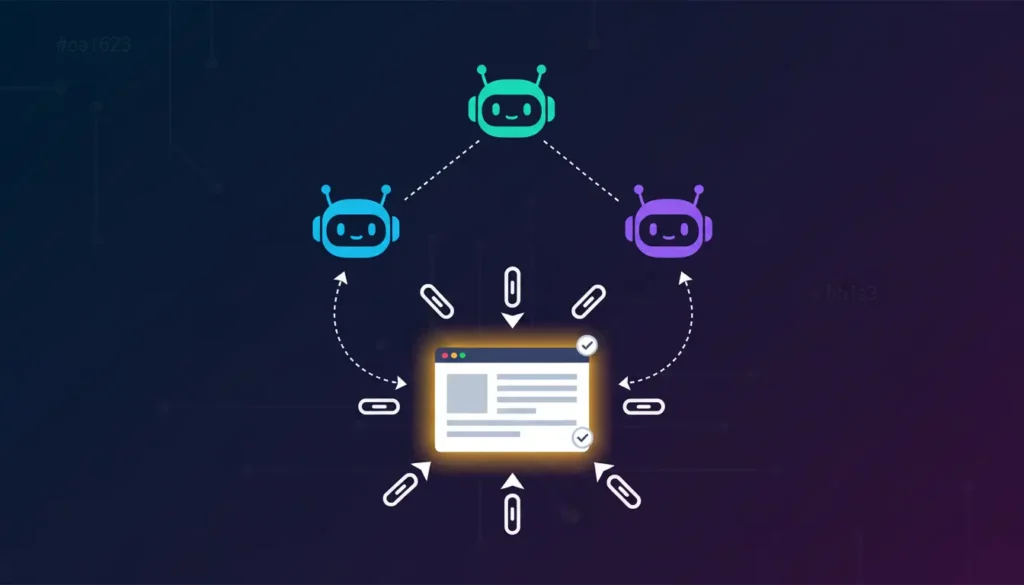
In 2026, it's not enough to position yourself on Google: you want to be quoted by AI.
Google AI Overviews, ChatGPT, Perplexity, and Gemini are changing the way people find information. And guess what? Sites with strong backlink profiles are cited more often.
Key data:
- 76% of the pages cited in AI Overviews are also in Google's Top 10
- AIs prefer sources with original data And demonstrated expertise
- THE listicle are among the contents most cited by AI
🤖 CHECKLIST: Link Building for AI Overviews
☐ Build a solid backlink profile (AIs cite authoritative sites)
☐ Include original data and statistics in your content
☐ Structure content with direct answers to questions
☐ Use clear H2/H3 and bullet points
☐ Get included in industry listicles
☐ Get cited as an expert on authoritative platforms
Further information: Read my complete guide to Generative Engine Optimization (GEO)
Brand Mentions: The New Paradigm
One of the most important novelties of 2024-2026 is the role of brand mentions (brand mentions without links).
What are brand mentions?
When someone mentions your brand or website in an article without including a hyperlink.
Why do they matter?
Google has confirmed that it uses mentions as signals of trust and authority, even without a traditional link. This is called “implied links”.
How to monitor brand mentions:
- Google Alerts (free): Set up alerts for your brand
- Brand24 (paid): full real-time monitoring
- Mention (paid): alternative to Brand24
Strategy: Convert mentions into links
When you find a mention without a link, contact the author:
📧 TEMPLATE: Request Link from Mention
Object: Thanks for the mention!
Hi [Name],
I just read your article on [Topic] and wanted to thank you for mentioning [Your Brand/Site].
I'm glad you found [what you mentioned] helpful.
If you think it could be useful for your readers, the direct link is: [URL]
Anyway, thanks again for the mention!
[Your name]
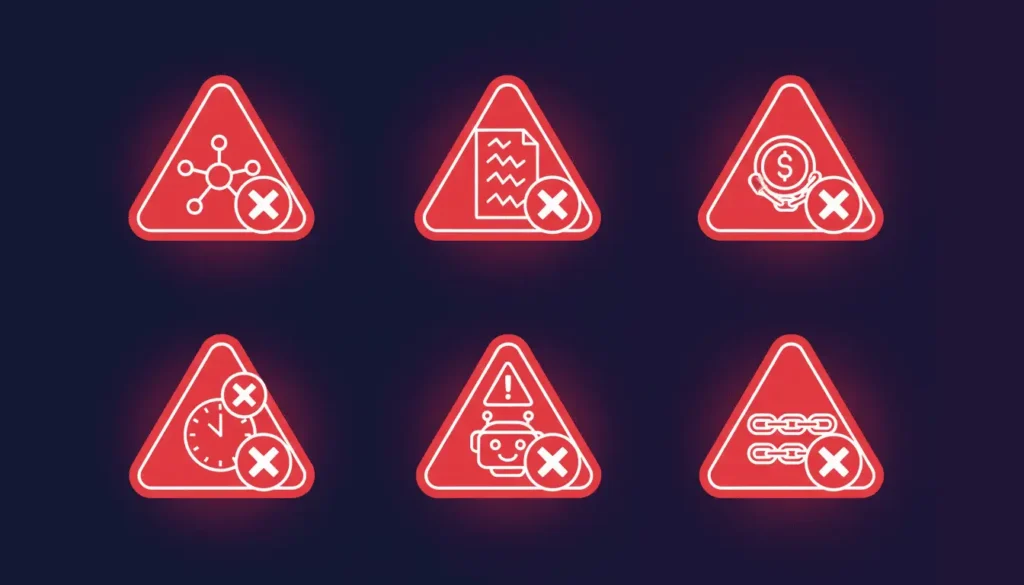
Link Building Mistakes to Avoid in 2026
🚫 WHAT NOT TO DO IN 2026
❌ PBN (Private Blog Networks)
Google is increasingly identifying them. Immediate risk of deindexing. There have been several cases of massive penalties in 2024-2025.
❌ Low-Quality Guest Posts
"Write for us" sites that accept any content are a trap. Google recognizes them as link farms.
❌ Large Scale Link Purchase
Cheap services on Fiverr, packages of 100 links for $50. They don't work and could damage your site.
❌ Expired Domains Abuse
Google's March 2024 Update introduced a specific policy against the abuse of expired domains. This poses a very high risk.
❌ AI Content at Scale
“"Scaled content abuse" is one of Google's new spam policies. Creating hundreds of AI articles to gain links = penalty.
❌ Anchor Text Over-Optimization
Always using the same anchor text (e.g., “SEO consultant Milan”) is a huge red flag. Sites with anchor diversity below 30% lost an average of 15 positions.
Google Penguin: How to Avoid the Penalty
Google Penguin is the algorithm that specifically targets spam link building techniques.
How to avoid it:
- Build links with white-hat strategies
- Diversify your anchor texts (use brand name, naked URLs, variations)
- Avoid unnatural link acquisition spikes
- Regularly check your backlink profile with Ahrefs/SEMrush
- Use Google's Disavow Tool to Disavow Toxic Links
Link Building Tools in 2026
Backlink Analysis
- Ahrefs – The most comprehensive, DR/URL Rating, competitor analysis
- SEMrush – Excellent for audits and gap analysis
- Moz Link Explorer – DA/PA, spam score
- Majestic – Trust Flow / Citation Flow
Outreach & Digital PR
- Prowly – Journalist database + CRM + AI pitch
- BuzzStream – Large-scale outreach management
- Pitchbox – Outreach automation
- Hunter.io – Find emails from any domain
Brand Mentions Monitoring
- Google Alerts – Free, basic
- Brand24 – Complete, real-time
- Mention – Alternative to Brand24
Broken Link Finding
- Ahrefs Broken Link Checker
- LinkMiner (Chrome extension)
- Check My Links (Chrome extension)
HARO Alternative
- Featured.com
- Qwoted
- Help a B2B Writer
How Much Does Link Building Cost in 2026?
💰 BUDGET LINK BUILDING 2026
• Quality single backlink (DR 50+): $300-600
• Average market cost: $508.95 per link
• Digital PR Campaign: $1,500-10,000/month
• Guest post on the DA 50+ website: $150-500
• Links from newspapers: $500-2.000+
• Average company budget: 28% of total SEO budget
Free Strategies: HARO, Help a B2B Writer, broken link building, organic guest post
How Long to See Results?
An Authority Hacker survey of 755 SEO professionals revealed:
- 1-3 months: The majority sees the first signs of impact on the rankings
- 3-6 months: Significant and measurable results
- 6-12 months: Full impact on competitive keywords
Important: Link building is a long-term game. Don't expect miracles in 30 days.
Frequently Asked Questions about Link Building
Is link building still important in 2026?
Absolutely. Backlinks remain among the top three ranking factors. What has changed is the emphasis on quality, relevance, and trust signals over pure quantity.
How many backlinks do you need to rank?
It depends on the competitiveness of the keyword. On average, pages in the top rank have 3.8x more backlinks than pages in positions 2-10. For local or less competitive keywords, 10-20 quality links may suffice; for competitive national keywords, hundreds are needed.
Are nofollow links any good?
Yes. Marketers consider them useful. They contribute to a natural profile, can generate referral traffic, and Google considers them "suggestions" (it doesn't completely ignore them like it used to).
Is it better to have a few quality links or many average links?
Always too few quality links. One link from an authoritative and relevant site is worth more than 100 links from mediocre sites. Furthermore, low-quality links can damage your profile.
Does HARO still exist?
Yes! It shut down in December 2024 when it was called Connectively, but was relaunched as Featured.com in April 2025. It's still running, but with new anti-spam rules and AI filters to block artificially generated responses.
How to avoid Google penalties?
Diversify your anchor text (never use the same keyword >30% several times), avoid obvious link schemes, build links gradually, focus on thematic relevance, and use the Disavow Tool to disavow toxic links.
Conclusion
Link building in 2026 is no longer the "Wild West" of a few years ago. Google has become much more sophisticated, and manipulative tactics no longer work.
What really works:
- Digital PR and newsworthy content creation
- Original research with proprietary data
- Expert contributions (HARO, Featured, Qwoted)
- Building genuine relationships in your industry
- Focus on quality, relevance and trust signals
What to avoid:
- PBN, link farm, bulk link purchase
- Repetitive anchor texts
- AI content at scale
- Shortcuts that promise quick results
There's no secret shortcut. Effective link building takes time, strategy, and consistency. But the results—better rankings, more organic traffic, and AI citations—are absolutely worth it.
★★★★★
400+ projects completed • 9+ years of experience
Is Your Backlink Profile Strong Enough?
Book a free audit and discover hidden link building opportunities.
📧 info@adriangram.it • Guaranteed response within 24 hours