

Generative Engine Optimization (GEO) is the practice of optimizing content for citation by AI-based search engines like ChatGPT, Perplexity, and Google AI Overviews. Unlike traditional SEO, which focuses on ranking, GEO focuses on citation. According to a Princeton University study (2024), GEO techniques can increase visibility by up to 40%. The most effective strategies include: adding verifiable statistics (+40%), including citations from authoritative sources (+40%), optimizing for fluency (+15-30%), and implementing structured Schema markup.
AI Overview Checker
Find out if you appear in Google's AI
What is Generative Engine Optimization (GEO)?
Generative Engine Optimization (GEO) is the practice of optimizing digital content to increase visibility in responses generated by artificial intelligence systems.
Unlike traditional SEO, which focuses on ranking in classic search results, GEO aims to ensure your content is cited, referenced, and used as a source in responses generated by Large Language Models (LLMs) such as ChatGPT, Claude, Gemini, and Perplexity.
The term was formally introduced in November 2023 by a team of researchers led by Pranjal Aggarwal of Princeton University, in collaboration with Georgia Tech, the Allen Institute for AI, and IIT Delhi. study published on arXiv, presented at the conference ACM SIGKDD 2024 in Barcelona, demonstrated that specific optimization techniques can increase visibility in generative engines up to 40%.
The Paradigm Shift: From Ranking to Citation

For decades, the goal of SEO was simple: rank on the first page of Google. If you ranked third, you still got traffic. If you ranked tenth, something would come.
In 2026, this model is changing radically.
Generative search engines don't display a list of 10 blue links. They synthesize a single answer, drawing from multiple sources. If your content isn't cited in that answer, you're invisible. It doesn't matter how well-ranked your site is: if AI doesn't consider you a reliable source, you don't exist for the user.
“With generative engines, you don't compete to be on the list. You compete to be THE answer.” — Princeton/Georgia Tech study, 2024
How Generative Motors Work
Generative Engines (GE) operate fundamentally differently from traditional search engines:
1. Collection of sources: AI collects information from multiple web pages, documents, and databases.
2. Summary: Use an LLM to synthesize information into a coherent response.
3. Quote: Attributes (when applicable) information to the original sources.
4. Presentation: It shows the user a direct answer, often without having to click on any links.
This process means that traditional factors like backlinks and keyword density are given a different weight. What matters now is whether your content can be easily extracted, verified, and cited by AI.
SEO vs. AEO vs. GEO: The Key Differences
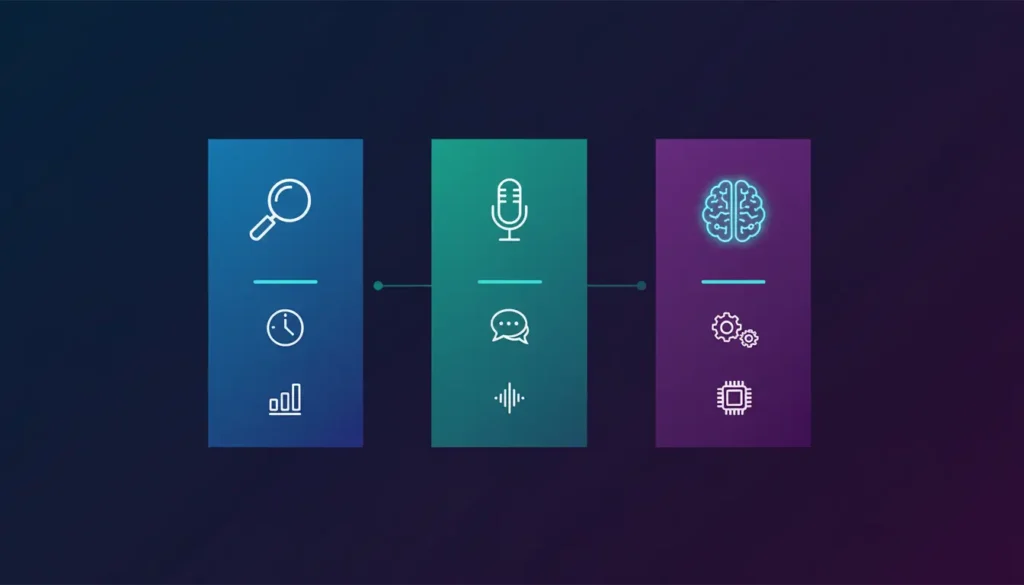
As search has evolved, three complementary optimization approaches have emerged. For more information, see also Wikipedia page on GEO.
| I wait | SEO | AEO | GEO |
| Objective | Ranking on SERP | Featured Snippets | AI Quote |
| Target | Google, Bing | Voice Search, Snippets | ChatGPT, Perplexity, AI Overviews |
| Key Metric | Position, CTR | Presence in Snippets | Citation Rate, AI Share of Voice |
| Technical Focus | Backlinks, Keywords | FAQ Schema, Q&A Structure | EEAT, Entity, Statistics |
| Result | Click to the site | Direct response | Brand cited as source |
SEO (Search Engine Optimization)
Traditional SEO focuses on organic search rankings on Google and Bing. Key tactics include on-page optimization, link building, keyword research, and technical performance. The goal is to appear in the top 10 results for the target query.
AEO (Answer Engine Optimization)
AEO emerged with the rise of voice searches and featured snippets. It focuses on providing direct, structured answers that Google can extract and display in position zero. It uses FAQ schema, structured lists, and Q&A formats.
GEO (Generative Engine Optimization)
GEO goes further by optimizing for citation in AI-generated responses. It's not enough to provide an answer: you must be recognized as an authoritative source that AI can cite with confidence. This requires verifiable statistics, expert citations, and clear entity identity.
The good news: These three strategies are not mutually exclusive. A solid SEO strategy supports both AEO and GEO. According to a study by SurferSEO, approximately 50% of the sources cited in the AI Overviews are also in the top 10 of the traditional results.
Why GEO is Crucial in 2026
The numbers speak for themselves: user behavior is changing radically, and those who don't adapt risk invisibility.
The Statistics You Need to Know

Key Data 2024-2025
58% of Google searches end without clicks — Pew Research, 2025
180+ million of monthly users on ChatGPT
357% increase in traffic from AI platforms year over year — Semrush Report 2024
34.5% CTR drops for top-ranking content due to AI Overviews — Ahrefs Study
1.5+ billion Google AI Monthly Users Overviews
46% Gen Zers Use ChatGPT or Perplexity BEFORE Visiting Websites — GWI Report 2025
800% increase in referrals from LLM — Semrush
The Generational Change
Gen Z is driving a fundamental shift in search behavior. These users often skip traditional search engines entirely, preferring to ask directly on ChatGPT or Perplexity.
As noted by the Jasper study (2025): “AI platforms already drive 6.5% of organic traffic and are projected to hit 14.5% within the next year.”
This means that even though these users might not be your ideal target audience today, they will be tomorrow. And if you're not visible on their favorite platforms, you won't exist for them.
The Risk of AI Invisibility
Imagine this scenario: a potential client asks ChatGPT, "Who's the best SEO consultant in Switzerland?" If your brand isn't listed in that response, you've missed the opportunity. It doesn't matter how beautiful your website is or how high your Google rankings are.
Gartner predicts that by 2026, the 25% of search traffic will shift to AI interfaces. Anyone who doesn't prepare now risks losing a quarter of their potential traffic.
The 9 Scientifically Proven GEO Strategies

The Princeton University study He tested nine different optimization strategies, measuring their impact on visibility in generative search engines. Here are the results:, sorted by effectiveness.
1. Statistics Addition (+40% Visibility)
Things: Add statistics, numbers, and verifiable data to your content.
Why it works: Generative engines look for concrete, verifiable information to cite. When your content includes specific statistics, it becomes a preferred source because AI can extract precise data to include in responses.
How to implement:
• Include specific percentages instead of vague statements
• Cite the data source (year, institution, study)
• Use concrete numbers: “400+ projects” instead of “many projects”
• Update statistics regularly to keep them current
Before/After Example:
Before: “Our clients see significant improvements in organic traffic.”
After: “Our clients see an average increase of 73% in qualified organic traffic within 90 days (2024 internal data, n=47 projects).”
2. Quotation Addition (+40% Visibility)
Things: Include direct quotes from experts, studies, or authoritative sources.
Why it works: When you cite external sources in your content, you're modeling the exact behavior generative engines use in their responses. AI recognizes this pattern and considers you a more trustworthy source.
Effective Pattern:
Use the format: “According to [Authoritative Source], [specific statement].”
Example:
“According to the Princeton University study (2024), Generative Engine Optimization techniques can increase visibility in AI engines up to 40%.”
Favorite sources for LLMs: Universities, research institutes, scientific publications, recognized newspapers, government documents.
3. Cite Sources (+30-40% Visibility)
Things: Include in-text citations and references to credible sources, not just links.
The Princeton study demonstrated a surprising result: Low-ranking sites that implement this technique see a 115% increase in visibility, often surpassing higher-ranking sites.
Difference between Link and Citation:
❌ Link only: “Find out more here” [hyperlink]
✅ In-text quote: “According to the WHO report (2024), over 70% of the global population will live in urban areas by 2050.”
In-text citations allow AI to extract the full information without having to follow external links.
4. Fluency Optimization (+15-30% Visibility)
Things: Improve text readability and fluency to make it easier for AI to process.
Generative engines prefer content they can easily process and reproduce. Clear, grammatically correct, and logically structured texts are more likely to be cited.
Best Practices:
• Use clear and direct sentences
• Avoid excessive passive constructions
• Logical structure: one idea per paragraph
• Avoid ambiguity and indefinite pronouns
• Maintain terminological consistency
5. Easy-to-Understand (+15-30% Visibility)
Things: Write accessible content, with explicit definitions of technical terms.
How to implement:
• Define technical terms at the first occurrence
• Use analogies to explain complex concepts
• Include glossaries or FAQ sections
• Write as if you were speaking to an intelligent but not expert professional in your specific field
6. Structured Data & Schema Markup
Things: Implement structured markup (Schema.org) to help AI understand the content.
Schema markup isn't just for Google's rich snippets. It provides a layer of metadata that LLMs can use to better understand who you are, what you do, and how trustworthy you are.
Essentials for GEO:
• Person: For author and “About Me” pages — schema.org/Person
• Organization: For the brand/company — schema.org/Organization
• Article: For editorial content — schema.org/Article
• FAQ Page: For FAQ sections — schema.org/FAQPage
• HowTo: For step-by-step guides — schema.org/HowTo
• Local Business: For local businesses
7. EEAT Optimization
Things: Demonstrate Experience, Expertise, Authoritativeness and Trustworthiness. See the Official Google Quality Rater Guidelines.
Google has introduced EEAT into its Quality Raters guidelines, but these signals are even more critical for GEO. LLMs constantly evaluate whether a source deserves citation.
How to Demonstrate EEAT:
Experience: Share real case studies, proprietary data, first-hand experiences
Expertise: Show credentials, certifications, years of experience
Authoritativeness: Get mentions from industry publications, media
Trustworthiness: Transparency about who you are, clear policies, HTTPS, verifiable contact information
8. Entity Optimization
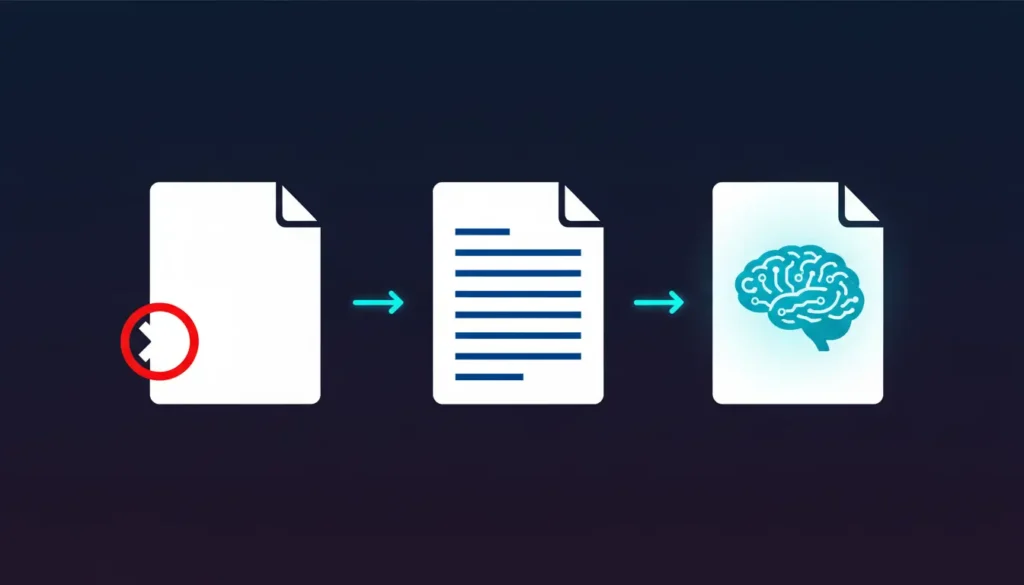
Things: Build a recognizable entity presence in the Knowledge Graph.
Modern search engines (and LLMs) do not treat content as isolated pages. They solve entity — your organization, your authors, your services — and verify them against external sources like Google Knowledge Graph.
How to Build Your Entity:
• Use sameAs links to link profiles (LinkedIn, Wikipedia, Crunchbase)
• Maintain NAP (Name, Address, Phone) consistency everywhere
• Create a detailed “About Us” page with Person/Organization Schema
• Get mentions (not just links) from authoritative sources
• Build co-citations with other recognized brands in your industry
“AI systems form a knowledge graph: Organization → People → Services → Locations → Proof. They compare competing graphs and ask: Is this entity clearly who it says it is?”
9. The llms.txt File
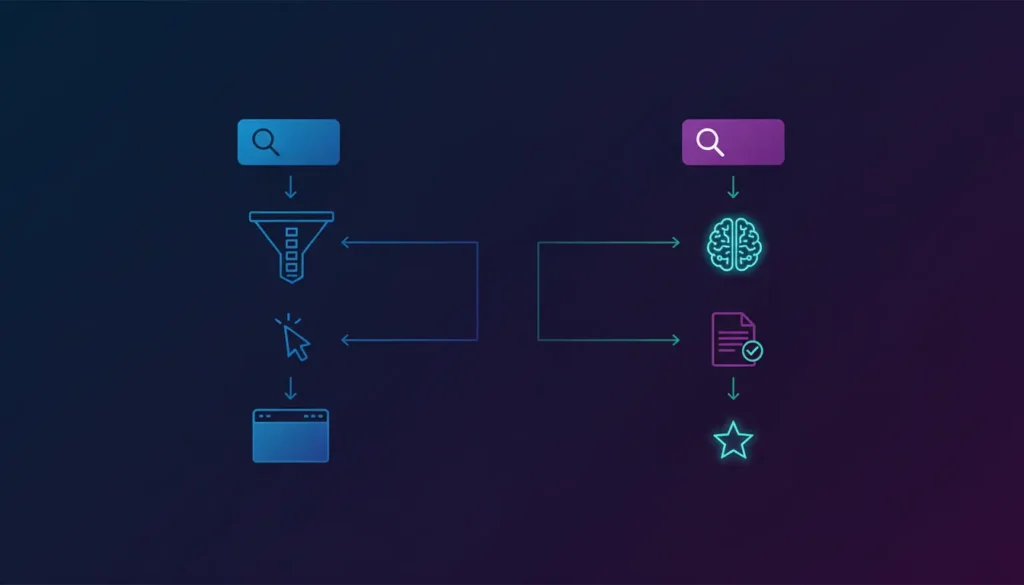
Things: A new proposed standard for communicating directly with LLMs, similar to robots.txt but for AI. See the official specification at llmstxt.org.
Proposed by Jeremy Howard (co-founder of Answer.AI and fast.ai) in September 2024, llms.txt is a Markdown file located at the root of the site that provides LLMs with a structured map of the most important content.
Differences with Other Files:
robots.txt: Tells crawlers what NOT to index
sitemap.xml: List all available URLs
llms.txt: Indicate which contents are a priority for AI
Basic Structure:
• H1: Name of the project/site
• Blockquote: Short summary
• Sections: Detailed information
• Links: URLs to important resources with descriptions
Who already uses it: Anthropic, Cursor, Vercel, Cloudflare, and thousands of technical documentation sites.
How to Optimize for ChatGPT, Perplexity, and Google AI
Optimize for ChatGPT
ChatGPT (OpenAI) is the most widely used generative engine. Here's how to maximize your chances of being cited:
1. Prioritize TL;DRs and structured summaries at the beginning of the articles
2. Use consistent formatting: headers, bullet points, short paragraphs
3. Include high-EEAT content: named authors, original research, schema markup
4. Answer multi-intent queries: “Best X software for remote teams”
5. Keep content up to date: GPT-4 favors recent sources
Optimize for Perplexity
Perplexity.ai It stands out for its transparency in citations. It is more explicit in showing sources.
1. Prefer transparent quotes and clear editorial structure
2. Include original statistics and structured comparisons
3. Format for scannability: short and declarative statements
4. Optimize URLs with slug clean (e.g. /compare-top-crm-tools-2025)
5. Create “answer kit” content: guides + calculators + templates + interconnected FAQs
Optimizing for Google AI Overviews
Google's AI Overviews display summarized answers at the top of the results. According to Search Engine Land, approximately 99% of the sources cited in the AI Overviews also appear in organic results.
1. Maintain strong SEO: Being in the top 10 increases your chances of being cited
2. Create comprehensive content that anticipate related sub-questions
3. Use FAQ Schema to increase the chances of inclusion
4. Align with search intent and semantic relevance
5. Update regularly: Google favors fresh content
GEO Checklist: 25 Immediate Actions
CONTENT OPTIMIZATION
□ 1. Add a 50-100 word “In Brief” summary to the beginning of each article
□ 2. Include at least 3-5 statistics with sources per article
□ 3. Add expert citations in the format “According to [Source]…”
□ 4. Use structured headings (H2, H3) for each section
□ 5. Define technical terms at the first occurrence
□ 6. Create FAQ sections for each pillar page
□ 7. Update existing content with recent data
TECHNICAL SETUP
□ 8. Implement Schema Article on all content
□ 9. Add Person Schema to About Me page
□ 10. Implement Schema Organization
□ 11. Add FAQPage Schema where appropriate
□ 12. Create the llms.txt file in the root of the site
□ 13. Verify Schema with Google Rich Results Test
ENTITY BUILDING
□ 14. Complete and optimize your Google Business Profile
□ 15. Add sameAs links to all social profiles
□ 16. Create a detailed author page
□ 17. Maintain consistent NAP across all channels
□ 18. Get mentions on industry directories
□ 19. Publish guest posts with full author bio
MONITORING
□ 20. Configure tracking for referrals from ChatGPT/Perplexity
□ 21. Monitor brand mentions in AI responses
□ 22. Track appearances in AI Overviews
□ 23. Use Semrush/Ahrefs AI modules
□ 24. Check the accuracy of AI citations
□ 25. Update main contents quarterly
DOWNLOAD THE COMPLETE CHECKLIST IN PDF
Do you want this checklist in printable format + ready-to-use llms.txt template?
→ [INSERT DOWNLOAD LINK / EMAIL FORM]
How to Measure GEO Success
Traditional metrics (ranking, CTR) don't fully capture the value of GEO. Here are the new KPIs to monitor:
Key GEO Metrics
1. Generative Appearance Score: Frequency and prominence of your source in AI responses
2. Share of AI Voice: Proportion of AI responses where your brand is mentioned
3. AI Citation Tracking: Monitoring mentions and citations in the generated text
4. Attribution Rate: Percentage of responses that explicitly mention your domain
5. AI Referral Traffic: Traffic from AI platforms (trackable in GA4)
Recommended Tools
• Semrush AI Toolkit — Citation Tracking in AI Overviews
• Ahrefs Brand Radar — Brand mentions in AI responses
• Profound — ChatGPT Citation Analysis
• Writesonic GEO — AI Visibility Dashboard
The Future of Search: Predictions for 2025-2030
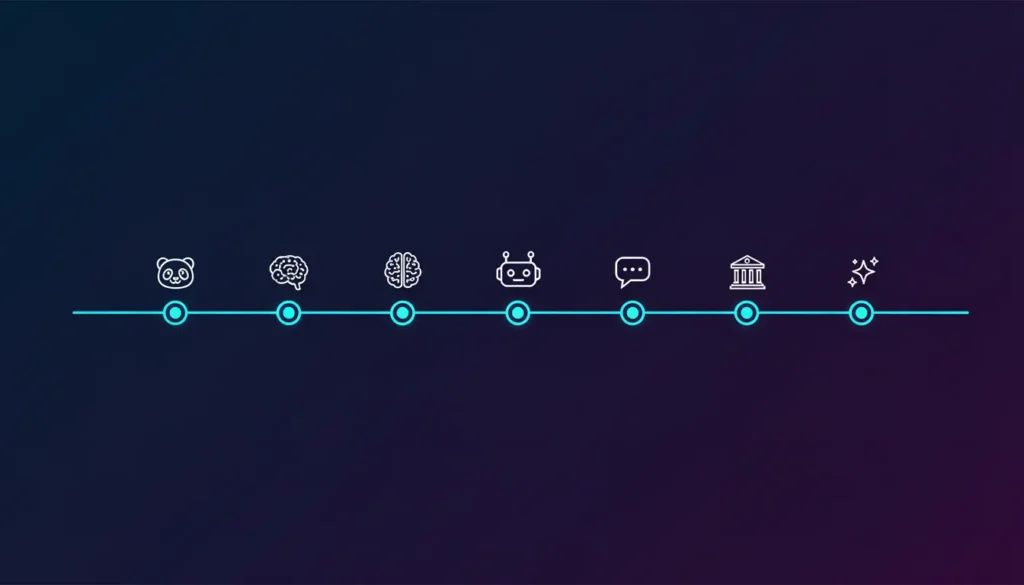
Emerging Trends
1. Multimodal Search: AI that understands text, images, video and audio together
2. Voice + Visual AI: Assistants that combine voice and visual input
3. Agent-Based Search: AI agents that perform actions, not just provide information
4. Personalized AI Answers: Responses tailored to the user's history and preferences
Implications for Brands
• The distinction between “being found” and “being chosen” will become even clearer
• Brands will need to build recognizable entities, not just content
• The quality of citations will outweigh the quantity of backlinks
• Those who own proprietary data will have a competitive advantage
FAQ – Frequently Asked Questions about GEO
What is GEO (Generative Engine Optimization)?
GEO is the practice of optimizing digital content to increase visibility in responses generated by artificial intelligence systems like ChatGPT, Perplexity, Claude, and Google AI Overviews. Unlike traditional SEO, which focuses on rankings, GEO focuses on citations.
What is the difference between SEO and GEO?
SEO optimizes for ranking in traditional search results (10 blue links). GEO optimizes for being cited as a source in AI-generated answers. SEO measures positions and CTR, GEO measures citation rate and AI share of voice.
Will GEO replace traditional SEO?
No, GEO complements SEO, not replaces it. According to the data, approximately 501 TP3T of the sources cited in the AI Overviews still come from the top 10 organic results. A good SEO strategy remains the foundation for GEO success.
What are the most effective GEO strategies?
According to the Princeton University study (2024), the most effective techniques are: adding verifiable statistics (+40% visibility), including citations from authoritative sources (+40%), citing sources in-text (+30-40%), and optimizing text fluency (+15-30%).
How do I know if I'm being cited by ChatGPT or Perplexity?
You can manually check by searching for queries relevant to your industry on ChatGPT, Perplexity, and Google AI Overviews. For systematic monitoring, tools like Semrush AI Toolkit, Ahrefs Brand Radar, and Profound offer automatic AI citation tracking.
What is the llms.txt file and how do I create it?
The llms.txt file is a standard proposed in 2024 for communicating directly with LLMs. It's a Markdown file located at the root of your site (yoursite.com/llms.txt) that tells AI engines which content is priority. It includes: site name, short description, and links to the most important pages with descriptions.
What Schema markup do I need for GEO?
The essential schemas for GEO are: Person (for author pages), Organization (for the company), Article (for editorial content), FAQPage (for FAQ sections), and HowTo (for guides). These help LLMs understand who you are and how trustworthy you are.
Does GEO work for small sites or only for large brands?
The Princeton study showed that lower-ranking sites benefit most from GEO techniques, with visibility increases of up to 115%. This "democratizing effect" means that small content creators can compete with large brands if they implement GEO strategies correctly.
How long does it take to see GEO results?
The timeframe varies based on the update frequency of the AI indexes. For Google AI Overviews, changes can take weeks to reflect. For ChatGPT and Claude, which aren't continuously crawled, the timeframe is less predictable. The key is to build consistent authority over time.
What is the most important metric for measuring GEO success?
The key metric is the "Citation Rate" or "AI Share of Voice"—the frequency with which your brand is cited in AI responses to relevant queries in your industry. Other important metrics include referral traffic from AI platforms (trackable in Google Analytics 4) and the Attribution Rate.
Conclusion: Act Now or Become Invisible
Generative Engine Optimization isn't a passing fad. It's the natural evolution of search, and those who don't adapt risk becoming irrelevant.
Key Points to Remember
1. GEO is complementary to SEO, it does not replace it
2. Statistics and expert quotes increase visibility up to 40%
3. Entity identity is crucial: who you are matters as much as what you say.
4. Low ranking sites can benefit up to 115% more than top ranking sites
5. The llms.txt file is becoming a standard for communicating with AI
Want to Implement GEO on Your Website?
I offer personalized consulting for companies that want to be cited by ChatGPT, Perplexity, and Google AI Overviews.
→ Request a Free GEO Analysis
Contact me: adrian.gramada91@gmail.com
Sources and References
1. Aggarwal, P., Murahari, V., Rajpurohit, T., Kalyan, A., Narasimhan, K., & Deshpande, A. (2024). GEO: Generative Engine Optimization. ACM SIGKDD Conference, Barcelona. arxiv.org/abs/2311.09735
2. Wikipedia. (2025). Generative engine optimization. en.wikipedia.org/wiki/Generative_engine_optimization
3. Ahrefs. (2025). AI Overviews CTR Study. ahrefs.com/blog
4. Semrush. (2025). LLM Referral Statistics Report. semrush.com
5. Gartner. (2025). Search Behavior Predictions 2026. gartner.com
6. Search Engine Land. (2025). llms.txt Proposed Standard. searchengineland.com
7. Google. (2024). Search Quality Rater Guidelines. guidelines.raterhub.com (PDF)
8. llmstxt.org. (2024). The /llms.txt File Specification. llmstxt.org
9. GWI. (2025). Gen Z Search Behavior Study. gwi.com
10. Jasper. (2025). GEO vs AEO vs SEO Guide. jasper.ai